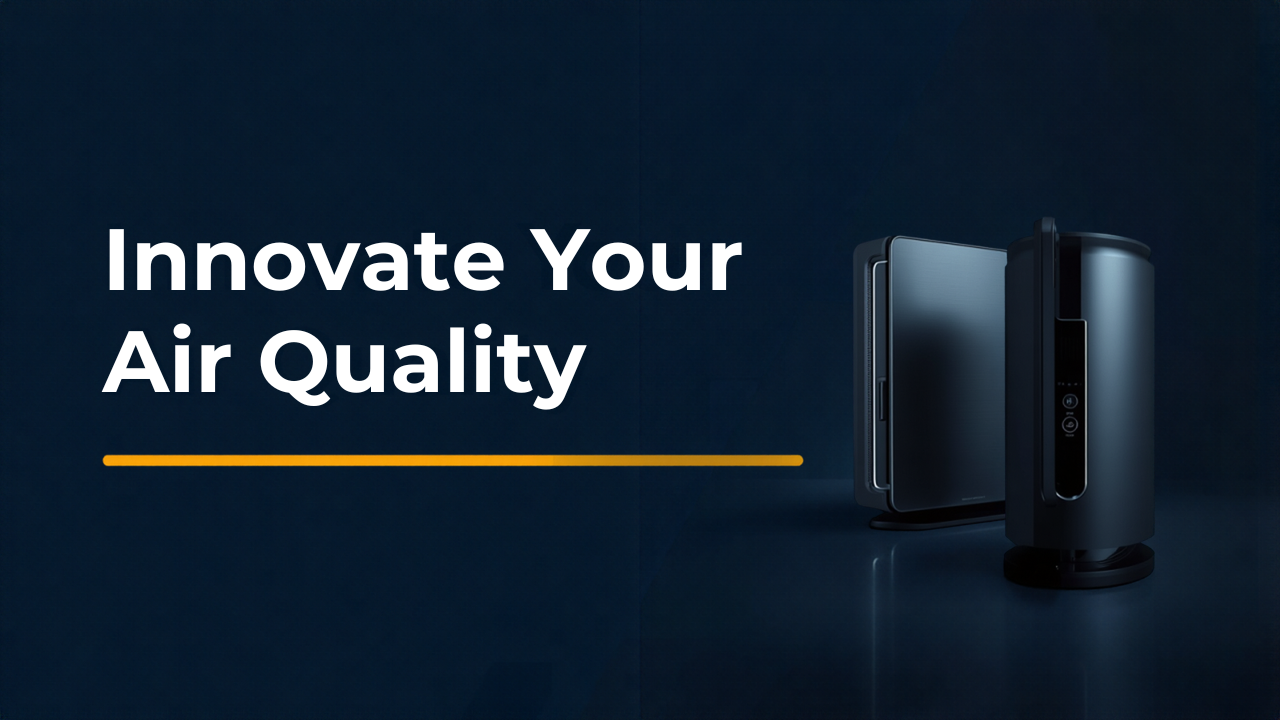
China manufactures most of the world's air purifiers and humidifiers. This guide covers HEPA/CADR specs, RCM certification, realistic MOQs and costs for Australian brands launching a private label range in 2026.
Last updated: 16 August 2026
In short: China and Vietnam manufacture the vast majority of air purifiers and humidifiers sold in Australia, and there's no local sourcing-agency guide to this category yet — which is exactly the gap this piece fills. The real work isn't finding a factory; it's verifying HEPA/CADR specs actually match the datasheet, confirming RCM electrical certification before the container leaves port, and locking in a MOQ that makes sense for a first order (typically 300-1,000 units depending on the model). Get those three things right and a private label air purifier or humidifier program is one of the more straightforward small-appliance categories to launch in Australia.
Canberra's mix of bushfire-smoke events, some of the driest winters of any Australian capital, and a growing base of home-office workers has turned air quality into a real purchasing trigger rather than a nice-to-have. Retailers and e-commerce sellers based in the ACT and southern NSW have been asking us how to get into this category without paying Australian distributor markups of 150-300% on imported stock.
Nationally, the picture is similar. Bushfire seasons, allergy season, and a general post-pandemic focus on indoor air quality have pushed air purifiers and humidifiers from a niche appliance into a mainstream homewares and electronics category — one that Australian sourcing content has largely ignored so far.
The vast majority of air purifiers and humidifiers sold globally come out of Guangdong and Zhejiang provinces in China, with Ningbo, Shenzhen, and Foshan being the three biggest manufacturing clusters. Vietnam has a smaller but growing base of contract manufacturers, mostly assembling components sourced from China rather than running full vertical production.
For most Australian brands starting out, China is the more practical choice — deeper factory choice, more OEM/ODM flexibility on housing design and control panels, and shorter lead times on tooling changes. Vietnam becomes worth considering once volumes are high enough to justify a second supply chain for tariff or risk-diversification reasons. For the full end-to-end process once you've chosen a market, see our overview of importing products from China to Australia.
Datasheets from Alibaba listings routinely overstate performance, so knowing which numbers to verify — and how — is the difference between a product that works and one that gets returned. Here's how the three common tiers typically compare on a real production run, not a marketing sheet:
SpecBudget tierMid tierPremium tierHEPA gradeH11 (basic)H13 True HEPAH13/H14 + activated carbonCADR (m³/h)150-200250-350350-500+Noise (sleep mode)45-50 dB35-40 dB25-32 dBSmart app / WiFi controlNoOptionalStandardTypical FOB cost (USD)$18-28$32-55$60-110Realistic first-order MOQ500-1,000300-500100-300
The single biggest gap between claimed and actual performance is CADR (Clean Air Delivery Rate) — factories routinely test it in ideal lab conditions on a smaller room size than they advertise. Always request the third-party test report (usually AHAM or a Chinese national equivalent) rather than accepting the factory's own number.
Yes. Any air purifier or humidifier that plugs into mains power is an electrical product under Australian law, which means it needs to carry the RCM (Regulatory Compliance Mark) before it can legally be sold here. This covers electrical safety testing and, for anything with WiFi or Bluetooth, EMC (electromagnetic compatibility) testing as well.
We've written a full explainer on exactly what RCM certification involves and how to get it sorted before your goods land — see What Is RCM Certification? for the complete process.
For a mid-tier private label air purifier, expect landed cost (FOB + freight + duty + RCM testing) of roughly AUD $60-90 per unit before your margin, with a 300-500 unit first order taking 45-60 days from deposit to factory completion, plus 4-6 weeks of sea freight to Sydney or Melbourne. Humidifiers run slightly cheaper — most retail between $40-120 in Australia, giving healthy margin room even after freight and compliance costs.
Sampling adds another 2-3 weeks up front. Skipping this step to save time is the single most common mistake first-time importers make in this category — see how to get product samples from Chinese suppliers for what to check before you approve a bulk run, and our Pre-Production Sample (PPS) guide for the specific checkpoint that catches most small-appliance defects before mass production starts.
Beyond the standard factory audit checklist, small appliance manufacturing has a few category-specific red flags worth checking: whether the factory owns its own injection moulding (rather than subcontracting the housing), whether they've exported RCM-compliant goods to Australia before (ask for reference shipments), and whether their quality control includes a burn-in test (running every unit for a set number of hours before packing) rather than spot-checking a sample batch only.
A pre-shipment inspection against AQL sampling standards is non-negotiable for electrical goods — see What Is AQL? for how acceptable quality limits work in practice.
No. It's a legal requirement for any electrical product, and retailers, marketplaces, and customs can all reject non-compliant stock. Budget for RCM testing before you place your production order, not after.
Most factories will negotiate down to 300-500 units for a humidifier using an existing mould with your logo and packaging, versus 1,000+ if you want a fully custom housing design.
Realistically 4-6 months from first supplier contact to stock arriving in an Australian warehouse, once you factor in sampling, RCM testing, production, and sea freight.
Not yet for most brands — Vietnam's small appliance manufacturing base is thinner and mostly relies on Chinese-made components, so China remains the more practical first choice for air purifiers and humidifiers specifically.
Yes — any humidifier that runs on mains power needs RCM certification in the same way an air purifier does, plus any additional testing if it includes UV sterilisation or WiFi connectivity.
Epic Sourcing has bilingual teams on the ground in China and Vietnam who've helped source more than 20,000 products for over 300 Australian businesses, with average savings of around 77% against local distributor pricing. For a category like air purifiers and humidifiers, that means we've already got the factory relationships, RCM-experienced suppliers, and QC processes in place — you don't have to learn Guangdong's small appliance market from scratch.
If you're a Canberra business (or anywhere else in Australia) looking to bring a private label air purifier or humidifier range to market, give us a bell before you sign with the first factory that replies to your Alibaba enquiry.