From June 2026, mandatory button battery safety standards apply to any product sold in Australia with a button or coin battery — toys, remotes, novelty gifts and more. This guide breaks down what compliance actually looks like on the factory floor, how to verify your China or Vietnam supplier is meeting it, and what happens if they're not.
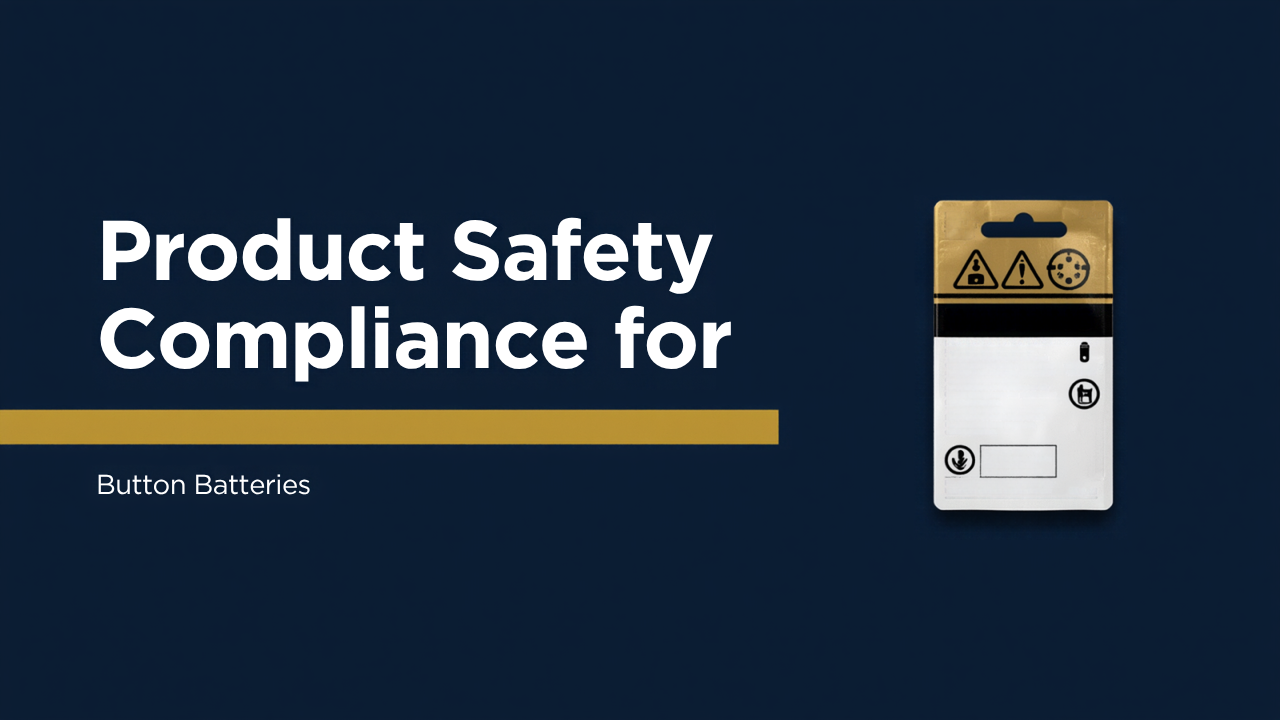
Last updated: 29 August 2026
In short: From 22 June 2026, Australia's mandatory button battery safety standards require secure battery compartments, warning labels, and compliant packaging on any product sold in Australia that contains a button or coin battery — toys, remotes, novelty gifts, calculators, hearing aids, and more. If you're importing products from China to Australia, your supplier needs to build compliance in before the goods ever leave the factory, because retrofitting a shipment at an Australian port is expensive and slow. Non-compliant products can be recalled, refused entry, or land you in front of the ACCC.
Australia introduced mandatory safety standards for button batteries and battery-operated products under the Australian Consumer Law, following a string of serious child injuries linked to swallowed button batteries. The standards cover two things: the batteries themselves (secure, child-resistant packaging and clear warning labels) and any consumer product that uses one (a compartment that needs a tool or two independent actions to open).
If your product — or its packaging — contains a button or coin battery and you sell it in Australia, it's covered. That includes remotes, LED candles, novelty toys, kitchen scales, calculators, thermometers, key fobs, greeting cards with sound chips, and flameless candles.
In practice, the standard catches a wider range of everyday imports than most first-time importers expect. Common categories affected include:
If you're unsure whether your product line is covered, the safest approach is to assume it is if it contains a button cell and get it quality tested before you place a bulk order.
Compliant products need a battery compartment that a child can't open easily. That generally means a screw, a tool-required latch, or a "push and slide" two-step mechanism — a compartment that simply pops open with a fingernail won't pass. The batteries themselves need to be sold in child-resistant packaging with a visible warning about the swallowing hazard, in wording the ACCC has approved.
This is where most of the risk in China and Vietnam sourcing actually sits — not in the standard itself, but in whether your factory has actually implemented it. Three checks matter most:
A reputable factory should be able to supply a test report against the relevant Australian/New Zealand standard (AS/NZS 62115 for toys, or the specific button battery requirements) before you commit to a production run. If they can't produce one, that's a red flag, not a formality to chase up later.
Specs on paper and the compartment on a sample can differ once a factory is under cost pressure. A factory audit and supplier verification process that specifically checks battery compartment security (not just general quality control) catches this before the container leaves port.
Labels approved for the US or EU market often don't meet Australia's specific wording requirements. This needs to be confirmed for the Australian SKU, not assumed from an export listing built for another country.
Non-compliant products can be subject to a mandatory recall, refused entry at the border, or trigger ACCC enforcement action — all of which cost far more than fixing the compartment design before production. A recall also does real damage to a retail brand's reputation, especially for anything marketed to families.
StepWhat happens1. Supplier shortlistConfirm each candidate factory has prior AS/NZS 62115 test experience2. Sample reviewPhysically test the battery compartment on the sample, not just the datasheet3. Pre-productionLock in Australian-compliant warning labels and packaging artwork before tooling4. Pre-shipment inspectionBattery compartment security checked as a specific line item, not folded into general QC5. Customs clearanceTest report and compliance documentation ready to present if requested
A Gold Coast-based homewares retailer we worked with built this five-step check into their onboarding process for every new battery-powered SKU — it adds a few days to sampling, but it's cheaper than a recall by an order of magnitude.
Yes. The standard applies to any product supplied in Australia, whether you're selling direct to consumers or wholesaling to retailers — the obligation sits with whoever first supplies the product into the Australian market.
No. A sticker alone won't fix a non-compliant battery compartment. The compartment itself needs to meet the access requirements — labelling is an additional requirement, not a substitute for a secure design.
Testing against the relevant standard is the only reliable way to demonstrate compliance if your product is ever questioned by the ACCC or Border Force. Relying on a supplier's word without a test report is a common and costly mistake.
Yes — the standard is about the product sold in Australia, not where it was manufactured. Vietnamese factories supplying button-battery products need to meet the same compartment and labelling requirements as Chinese factories.
Redesigning a battery compartment and retesting typically adds 3-6 weeks to a production timeline. Building the check in during supplier selection and sampling avoids this delay altogether.
Epic Sourcing's bilingual teams on the ground in China and Vietnam build compliance checks like this into supplier verification and pre-shipment inspection from day one — not as an afterthought once a container's already at the port. We've helped 300+ Australian businesses source safely from Asia, saving an average of 77% versus buying local, without the compliance headaches. Get in touch before your next production run and we'll flag the compliance risks before they become recalls.