Private label watch brands are booming in Australia. This guide covers quartz vs automatic movements, realistic MOQs and costs, and what to check before approving a bulk production run.
Last updated: 16 August 2026
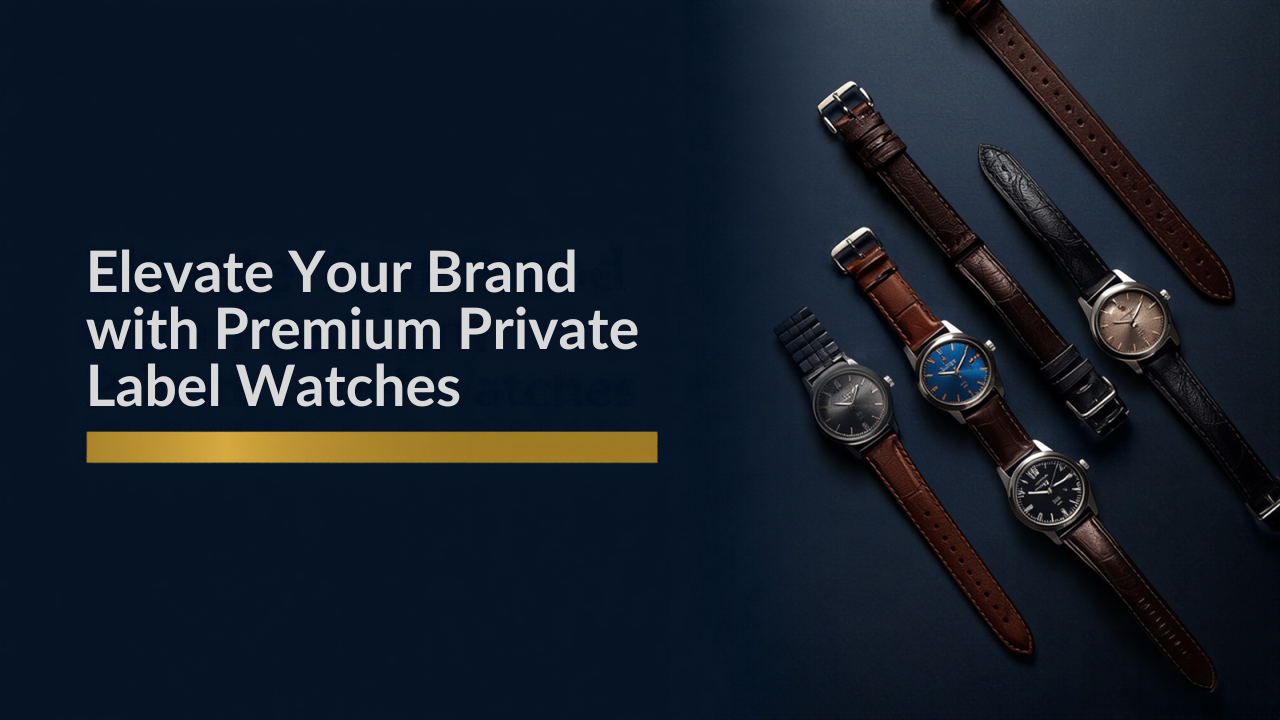
In short: Building a private label watch brand from China is far more accessible than most Australian founders assume — factories in Shenzhen and Guangzhou will build a custom-dial, custom-strap watch on an existing movement platform for MOQs as low as 100-300 units. The two things that actually determine quality are the movement (quartz vs automatic) and water-resistance rating, and the two things that determine cost are case material and strap type. Get a physical pre-production sample before committing to a bulk run — photos never show you how a clasp actually feels.
Hobart's small but growing crop of independent lifestyle and accessories brands has mirrored a broader national trend: Australian consumers have shown real appetite for direct-to-consumer watch brands that undercut the big Swiss and fashion-house names on price while still delivering a genuinely well-made product. Instagram and TikTok have made it possible to build a watch brand's entire customer base without a single retail stockist, which lowers the bar to entry dramatically compared to five years ago.
The catch is that "just find a factory on Alibaba" undersells how many decisions actually go into a good watch — decisions most first-time importers don't know to ask about until something goes wrong on the first shipment. If you're starting from a rough concept rather than an existing design, our reverse sourcing and product development service is often the better starting point than approaching a factory directly.
Quartz movements (battery-powered, Miyota or similar Japanese/Chinese-made calibres) are cheaper, more accurate day-to-day, and require far less quality control — they're the right starting point for most new brands. Automatic movements (self-winding, no battery) cost 3-5x more per unit and demand tighter tolerances from the factory, but they command a premium price point and a more "serious watch brand" perception.
Most successful new Australian watch brands start with a quartz range to prove the concept and cash flow, then introduce an automatic line once they have a customer base willing to pay for it.
ComponentEntry-level quartzMid-range quartzAutomaticMovementBasic Chinese quartzMiyota 2115 or similarMiyota 8215 / Seiko NH35CaseStainless steel, standard finish316L stainless, brushed/polished316L stainless or titaniumWater resistance3ATM (splash resistant)5ATM (swim safe)10ATM (dive-capable)Typical FOB cost (USD)$8-15$18-35$45-90Realistic first-order MOQ200-500100-30050-150
Strap and packaging choices move the cost more than most founders expect — a custom-branded presentation box and a genuine leather strap (versus PU leather) can each add $2-5 per unit, which matters when you're pricing a $150-250 retail watch.
Photos and even video calls with a factory cannot show you how a clasp mechanism feels after a week of daily use, whether the dial printing is genuinely scratch-resistant, or whether the water resistance rating holds up under real testing rather than the factory's marketing claim. This is exactly why a physical pre-production sample matters more in watches than in almost any other accessories category — see What Is a Pre-Production Sample (PPS)? for the full approval process we run every new watch client through before a single unit goes into mass production.
Beyond the sample, negotiate MOQ down where possible for a first order rather than accepting the factory's opening number — see MOQ Meaning: What It Is and How to Negotiate Better Minimums for tactics that work specifically with Chinese watch and accessories factories.
Watches sit in a different manufacturing category to general fashion jewellery: they involve a mechanical or electronic movement, water-resistance testing, and (for anything sold as "waterproof" or marketed toward swimming/diving) specific claims that Australian Consumer Law requires you to be able to substantiate. Our broader guide to importing jewellery and fashion accessories from China covers the general category, but watches warrant their own sourcing checklist because of the movement and water-resistance variables above.
Most Guangzhou and Shenzhen factories will do 100-300 units for a quartz watch on an existing case mould with your custom dial, strap, and packaging. Fully custom case tooling usually pushes MOQs to 500+.
Budget roughly AUD $15-40 landed cost per unit for a solid mid-range quartz watch (FOB cost, freight, duty, and sample development), before your retail margin. A 200-unit first order typically requires $4,000-8,000 in production cost.
Yes. Making an unsubstantiated waterproof or water-resistance claim can breach Australian Consumer Law if the product hasn't actually been tested to that rating. Always get the factory's test report and, ideally, a third-party verification for your first batch.
Quartz, in almost every case. It's cheaper, more forgiving on quality control, and lets you validate demand before committing to the higher cost and complexity of automatic movements.
Custom dial, hands, strap, and packaging are achievable at low MOQs. A genuinely custom case shape requires new tooling — usually a $1,500-4,000 one-off cost plus a higher MOQ to make it worthwhile.
Epic Sourcing's bilingual teams in China have sourced watch and accessories production for Australian founders from first sample through to full container orders, drawing on the same supplier network behind more than 20,000 products sourced and 77% average client savings. We manage the sample rounds, movement and water-resistance verification, and factory vetting so you're not learning Shenzhen's watch manufacturing district the hard way.
Thinking about launching a watch brand out of Hobart or anywhere else in Australia? Give us a bell before you approve a bulk order on sample photos alone.