


Australia's mandatory AS/NZS safety standards make importing baby furniture from China more complex than other categories — but the cost savings are real if you get compliance right. This guide covers the safety standards, a full landed cost breakdown, realistic timelines, and how to find a manufacturer that's actually tested for the Australian market.
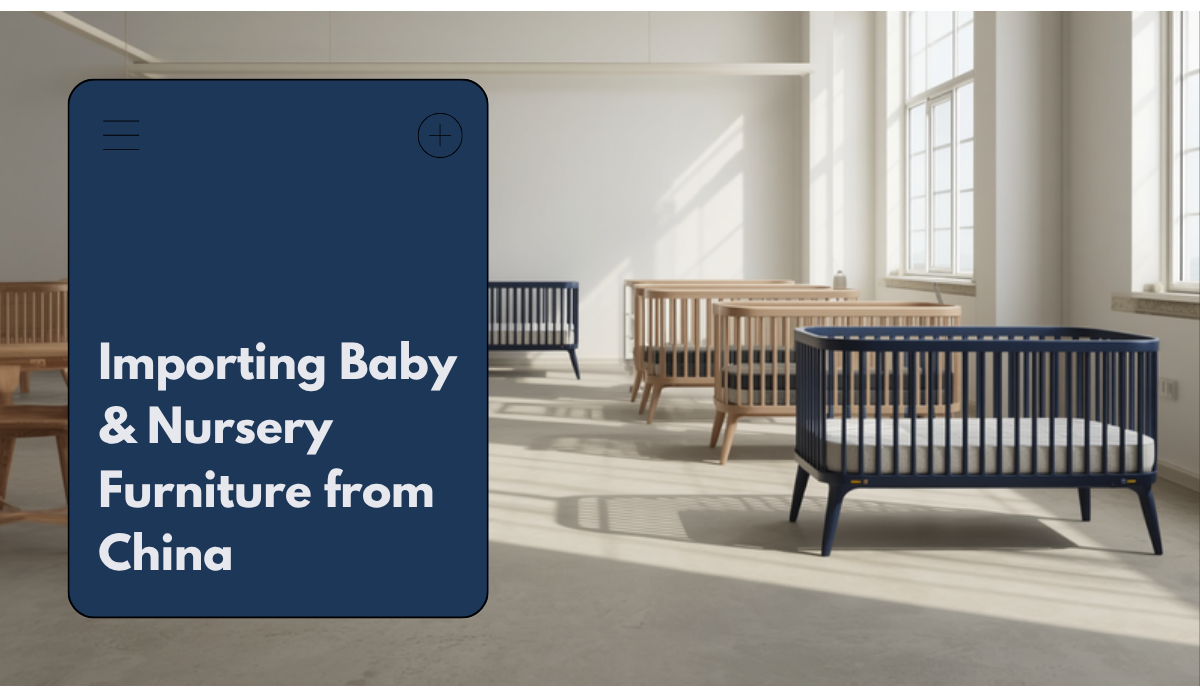
In short: Australia has some of the strictest mandatory safety standards in the world for cots, highchairs and other nursery furniture — and a huge share of what's sold here is manufactured in China. Importing baby furniture from China is absolutely doable for Aussie businesses of any size, but it only works if you build compliance with AS/NZS cot and furniture standards into your sourcing process from day one, not after your container has already landed. Budget 12-16 weeks from sample approval to delivery, expect unit costs 40-60% below local wholesale, and never skip third-party lab testing on safety-critical items like cots and highchairs.
Last updated: 27 July 2026
Baby and nursery furniture is one of the fastest-growing import categories for Australian eCommerce brands. Cots, change tables, highchairs and nursery storage units made in Guangdong and Zhejiang factories typically cost 40-60% less landed than equivalent locally-made pieces, and the manufacturing quality has improved dramatically over the past five years.
For a Coffs Harbour retailer or an online nursery brand shipping Australia-wide, that price gap is the difference between a viable margin and a product line that never gets off the ground. But nursery furniture sits in a different risk category to most imported goods — it's classified as a high-risk children's product under Australian Consumer Law, and getting compliance wrong can mean a mandatory recall, not just a bad review.
Cots sold in Australia must comply with AS/NZS 2172 (cots for household use), and prams/strollers fall under AS/NZS 2088. Household furniture more broadly is increasingly assessed against AS/NZS 4935 and related tip-over/stability standards, particularly for tall storage units like change tables and dressers. These aren't optional guidelines — non-compliant cots are a banned product under the ACCC's mandatory safety standard, and customs can seize non-compliant shipments at the border.
Before you place a deposit with any factory, ask for existing test reports against the relevant AS/NZS standard, and budget for independent retesting through a NATA-accredited lab (or an internationally recognised lab like SGS, Intertek or Bureau Veritas) once you've locked in your final specification. A factory's "we've exported to Australia before" claim is not the same as a current, product-specific test report.
Here's a worked example for a mid-size first order of cots, based on typical 2026 pricing for Guangdong-manufactured solid timber cots:
| Cost Component | Typical Range (AUD, per unit) | Notes |
|---|---|---|
| FOB unit cost (solid timber cot) | $55 - $95 | Depends on timber type and hardware |
| Sea freight (40ft container, shared) | $4 - $9 per unit | Varies with container fill rate |
| Australian import duty | 0-5% | Most furniture is duty-free under the tariff schedule; verify your HS code |
| GST | 10% of landed cost | Payable at the border |
| AS/NZS 2172 lab testing | $1,500 - $4,500 per product line | One-off cost per SKU, not per unit |
| Typical landed cost per cot | $75 - $130 | Before testing amortisation |
On a first order of 200 cots, that puts total landed investment somewhere between AUD $18,000 and $30,000 including testing — against a local wholesale cost for equivalent cots that regularly sits above $180-$250 per unit. That's the margin that makes the category worth the compliance effort.
For nursery furniture specifically, budget longer than you would for simpler homewares. Expect: 2-3 weeks for sampling and design sign-off, 4-6 weeks for lab testing against AS/NZS standards (run in parallel with production tooling where possible), 30-45 days production once tooling is confirmed, and 25-35 days sea freight to an Australian port. All up, most first-time nursery furniture importers should plan for 12-16 weeks from signed sample to stock on the shelf — longer if your first test report comes back with required design changes.
Nursery and children's furniture is a specialised category — you want a factory that already exports cots or highchairs to regulated markets like the EU, US or Australia, not a general furniture OEM adding a cot to their catalogue for the first time. Ask for their existing EN 716 (EU cot standard) or ASTM (US) certificates as a proxy for manufacturing discipline, even though you'll still need Australian-specific testing.
This is exactly where a sourcing agent on the ground earns their fee. Epic Sourcing's bilingual China team has sourced and quality-checked more than 20,000 products for over 300 Australian and New Zealand clients, and we know which nursery furniture factories have genuinely passed AS/NZS testing versus which ones are just saying so — see our furniture sourcing service for how we manage the whole process end to end.
Cots and prams have mandatory, legally enforced standards (AS/NZS 2172 and AS/NZS 2088). Other nursery furniture like change tables and storage units aren't always subject to a single mandatory standard, but retailers and marketplaces increasingly require compliance testing anyway, and product liability exposure is real regardless of whether a specific standard is mandatory.
You can, but it's a serious risk. Factory-supplied test reports are sometimes outdated, generic, or for a different product configuration than what you're actually ordering. Independent verification through an accredited lab against the current AS/NZS standard is the only way to be confident the product is legally sellable in Australia.
You cannot legally sell non-compliant cots in Australia, and the ACCC can compel a recall. This is why testing should happen before you commit to full production, not after the container arrives — the cost of retesting a sample is a fraction of the cost of a recall or destroyed stock.
Vietnam has a growing furniture manufacturing base, particularly for timber and rattan pieces, but the specialised nursery furniture supplier base (with AS/NZS-relevant testing experience) is still more concentrated in China's Guangdong and Zhejiang provinces. A China-plus-Vietnam dual sourcing approach can work well as your product range grows.
Sourcing agent fees typically range from a flat project fee to a commission on FOB value, and the right structure depends on order volume and how much hands-on QC and compliance support you need. See our guide on how much a sourcing agent costs in Australia for a full breakdown.
Epic Sourcing's China team manages the entire nursery furniture sourcing process for Australian brands — from vetting factories with genuine AS/NZS testing experience, to coordinating independent lab testing, to on-the-ground quality inspections before your container ships. With over 20,000 products sourced, 300+ happy clients and average client savings around 77%, we know exactly which compliance corners can't be cut on children's products.
Ready to bring a compliant, cost-effective nursery furniture range to market? Get in touch with the Epic Sourcing team for a free consultation, or read our guide on quality control when sourcing from China and our supplier audit guide to see how we vet every factory before you commit. And because children's products carry real liability exposure, it's worth reading our guide on product liability insurance for importers before your first shipment lands.


