Print on demand is one of the easiest ways to launch a product range in Australia, but standard POD platforms take a big bite out of your margin. This guide covers when it pays to source your own blanks direct from China and Vietnam, realistic costs, and the mistakes to avoid.
Last updated: 14 August 2026
In short: Print on demand lets Brisbane entrepreneurs launch a product range with zero inventory, but the local POD platforms most Australians start with take a big enough cut that margins get thin fast once you scale past a hobby. The bigger play in 2026 is sourcing your own blanks — t-shirts, mugs, phone cases, tote bags — direct from Chinese or Vietnamese factories and pairing them with a local Australian print partner or your own small-batch printing, which can lift margins by 20-40 percentage points once you're doing consistent volume.
Print on demand (POD) is a business model where you design products — apparel, drinkware, phone cases, wall art — and a printing partner produces and ships each order individually, so you never hold stock or pay upfront for inventory. Most Australian sellers start on a platform like Printful, Printify or a local equivalent, which integrates with Shopify and handles printing, packing and shipping for a per-unit fee plus the blank product cost.
It's the lowest-risk way to test a product idea, which is exactly why it's popular with first-time Brisbane entrepreneurs — but that convenience comes at a real cost once you know your designs sell.
A standard local POD platform typically takes 40-55% of your retail price once you account for the blank cost and their printing/fulfilment fee, leaving you a genuinely thin margin on a $30 t-shirt. Once you've validated a design is a consistent seller — not a one-off — sourcing your own blank apparel or drinkware direct from a Chinese or Vietnamese factory and either printing locally in small batches or negotiating factory-direct printing changes the maths substantially.
The trade-off is you take on inventory risk and MOQs, so this move only makes sense once a design has proven repeat demand — trying to source your own blanks for an unvalidated idea is how most POD sellers tie up cash in stock nobody wants.
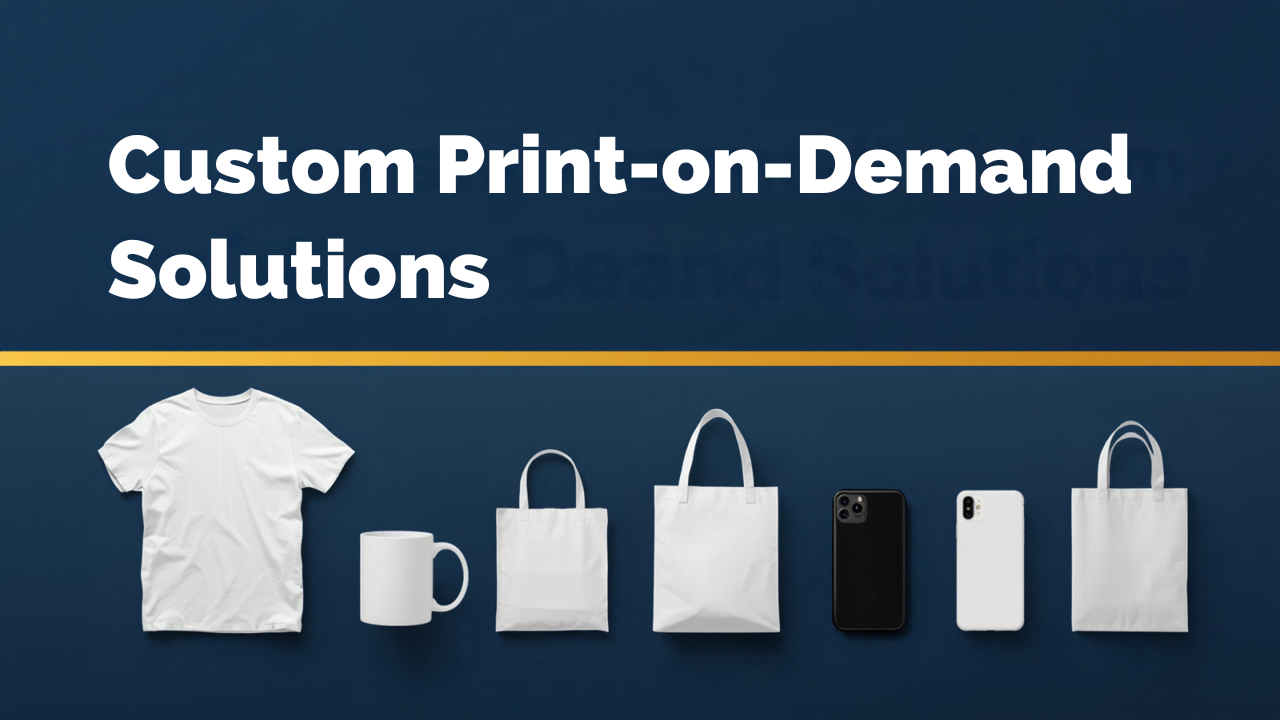
The categories with the best margin-improvement potential from direct sourcing are apparel (t-shirts, hoodies, caps), drinkware (stainless steel bottles, ceramic mugs), phone cases and tech accessories, and tote bags and canvas goods. These are high-volume, low-complexity blanks that Chinese and Vietnamese factories produce at genuinely low unit costs once you're ordering in the hundreds rather than ones and twos.
Here's a realistic comparison for a plain cotton t-shirt blank, landed in Brisbane, at a 300-unit order:
Sourcing routeCost per blank (AUD)Local POD platform (blank + their fulfilment fee)$14-$18Direct from China factory, landed, unbranded$3.80-$5.50Add local screen printing (per unit, small batch)$4-$6Total direct-sourced + printed~$9-$11.50
On a $32 retail t-shirt, that's the difference between a $14-18 margin and a roughly $20-23 margin once you're sourcing and printing yourself — a meaningful gap once you're moving hundreds of units a month.
Only move off a POD platform once a specific design has proven repeat sales — not because the per-unit maths looks good in theory.
Not every blank suits every print method. Confirm your factory's fabric composition works with your chosen printing technique (screen print, DTG, sublimation) before ordering a full run.
A 300-unit MOQ often means 300 units split across multiple sizes and colours, not 300 of one SKU — plan your size curve before you order.
Fabric weight, shrinkage and colour accuracy vary factory to factory. Approve a physical sample before committing to bulk production every time.
Yes, particularly as a low-risk way to test designs before committing capital — the shift most successful sellers make is moving proven designs off a standard POD platform and into direct-sourced blanks to protect margin at scale.
Typically 100-300 units per style for apparel and drinkware, though this varies by product complexity and whether you need custom colours or branding on the blank itself.
Yes, many factories offer in-house screen printing, embroidery or heat transfer as an add-on, which can simplify your supply chain once you're ordering enough volume to make it worthwhile.
Budget 6-9 weeks for a first order: 2-3 weeks sampling, 3-4 weeks production, and 3-4 weeks sea freight and clearance into Brisbane, plus your local printing turnaround.
Not for your first test batch on a standard POD platform. Once you're sourcing your own blanks in bulk, a sourcing agent typically pays for itself by negotiating better unit pricing and catching quality issues before they become returns.
Epic Sourcing has helped 300+ Australian businesses source everything from apparel blanks to full private-label ranges, with bilingual teams on the ground in China and Vietnam handling sampling, quality control and freight — and average client savings of around 77% versus buying local or through a standard POD platform. If your designs have proven themselves and you're ready to protect your margin, book a free discovery call with our team. If you're still deciding between dropshipping, POD and holding your own stock, our dropshipping in Australia guide breaks down the trade-offs, and our clothing manufacturing service covers custom apparel beyond blank print-on-demand runs. Selling on newer channels too? Our TikTok Shop sourcing guide covers a similar direct-from-factory playbook.