A practical 2026 guide for Darwin fitness brands sourcing resistance bands, yoga mats and home gym accessories direct from China, covering materials, MOQs, compliance and real landed costs.
Last updated: 13 August 2026
In short: Resistance bands, yoga mats, foam rollers and other home gym accessories are one of the easiest categories for Australian brands to source direct from China. Landed costs typically run 65-80% below Australian wholesale pricing, MOQs are low (often 200-500 units per item), there's no RCM electrical certification to worry about, and most factories can turn a custom-branded sample around in 2-3 weeks. The main things to get right are material safety (natural rubber latex vs TPE), print/branding method, and a proper landed-cost calculation before you commit to a container.
The home workout boom that started a few years back hasn't reversed — if anything, it's settled into a permanent shift, with Australians increasingly building out a home gym corner alongside (or instead of) a commercial gym membership. Darwin's fitness and wellness scene has grown quickly off the back of this, and a handful of local studios and online sellers we've spoken with have made the jump from reselling third-party brands to importing their own private label range once a style proved it could sell.
Home gym accessories are a genuinely friendly entry point for a first import run. There's no lithium battery, no complex electronics, and no TGA pathway to navigate — just fabric, rubber, foam and print. That's exactly why it's one of the categories we get asked about most from first-time importers testing whether they can run an import business at all.
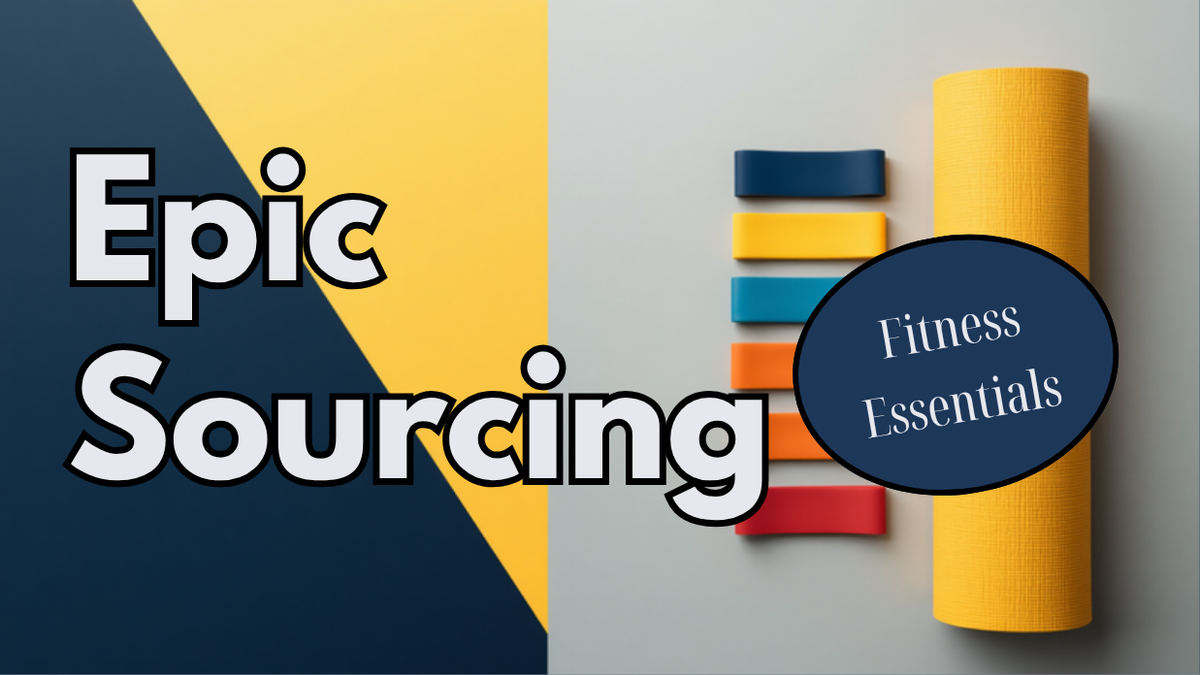
The bulk of the category splits into a handful of core product lines: resistance bands (loop bands, tube bands with handles, fabric booty bands), yoga and pilates mats, foam rollers and massage balls, ab wheels and sliders, jump ropes, and yoga blocks and straps. Guangdong and Fujian provinces host the bulk of China's fitness accessory manufacturing, with many factories running several of these product lines side by side — useful if you want to consolidate a multi-SKU range into one shipment.
The easiest products to start with are single-material items like foam rollers and yoga blocks, since there's no fabric sourcing or stitching involved. Resistance bands and yoga mats need a bit more spec work upfront, covered below.
Latex resistance bands and mats are cheaper and have better elasticity, but latex allergies are common enough that many Australian retailers now default to TPE (thermoplastic elastomer) instead — it's latex-free, non-toxic and increasingly the standard for anyone selling into a health-conscious market. Confirm which one you're getting in writing; some factories will quietly substitute latex for a cheaper blend unless you specify.
Yoga mats commonly come in 4mm, 6mm and 8mm thicknesses. Thinner mats suit yoga and pilates where ground contact and stability matter; thicker mats suit general home workouts where cushioning is the priority. Density matters as much as thickness — a cheap, low-density 6mm mat can feel worse underfoot than a well-made 4mm one.
A resistance band snapping mid-workout is the single biggest complaint in this category, and it's also a genuine safety and liability issue. Ask your factory for tensile strength test results and specify a resistance rating (light, medium, heavy, extra-heavy) that's been independently verified, not just marketing copy on the product page.
Most brands customise with a printed logo on the mat surface, a branded carry strap or bag, or coloured bands with printed packaging. Screen printing is the cheapest and most common method; heat-transfer and sublimation cost more but hold up better over repeated washing and stretching.
Here's a worked example for a mixed shipment of yoga mats and resistance band sets landing in Darwin, based on a 1,000-unit combined order.
| Cost component | Amount (AUD) |
|---|---|
| 500 TPE yoga mats @ $4.20 FOB | $2,100 |
| 500 resistance band sets (5-band, with bag) @ $3.60 FOB | $1,800 |
| Sea freight (LCL, China → Darwin via Melbourne/Brisbane transhipment) | $950 |
| Marine insurance | $55 |
| Import duty (5% of customs value) | $195 |
| GST (10% of value + duty + freight) | $510 |
| Customs brokerage + port fees | $520 |
| Delivery to Darwin warehouse | $340 |
| Total landed cost | ~$6,470 |
| Landed cost per unit (avg.) | ~$6.47 |
Against a typical Australian retail of $25-45 for a branded yoga mat and $30-50 for a resistance band set, that landed cost leaves real room for marketing spend and a healthy margin. Figures are illustrative — freight into Darwin often routes via a southern port, which can add a few days and a modest cost compared with Sydney, Melbourne or Brisbane deliveries.
This is one of the more forgiving categories for a first order. Most factories quote 200-500 units per style and colourway for yoga mats and resistance bands, and some will go lower for a simple, single-colour first run using their existing packaging with your logo added. Foam rollers and yoga blocks often have even lower MOQs, sometimes as low as 100-150 units, since there's no fabric or multi-component assembly involved.
If you're combining several SKUs with one factory — mats, bands and a foam roller, say — you can often negotiate a lower per-style MOQ than if you ordered each product from a different specialist factory.
Start on Alibaba or 1688, but treat every listing as a starting point, not a guarantee. Our guide to finding verified and legitimate Alibaba suppliers walks through exactly how to separate real factories from trading companies. Ask specifically for material test reports (latex-free/TPE confirmation, tensile strength for bands), request client references in the fitness category, and always order a paid sample before committing to bulk production.
Because bands and mats are simple products, some sellers skip pre-shipment inspection to save a few hundred dollars — that's a false economy. A quick AQL inspection catches inconsistent mat thickness, weak stitching on carry bags, and bands that don't meet the stated resistance rating before they land in your Darwin warehouse.
Yes, provided you specify latex-free (TPE) materials if you're concerned about allergies, and confirm tensile testing on bands. You're responsible under Australian Consumer Law for product safety, so build these checks into your supplier agreement from the first order.
Most factories quote 200-500 units per colourway for a first order, with some flexibility for a simple single-colour run using existing packaging. Combining multiple SKUs with one factory can help bring the per-style minimum down further.
Sea freight typically runs 25-35 days, often a little longer than shipments to Sydney or Melbourne since many services transit through a southern port first. Air freight is an option for urgent restocks but adds significant cost for a bulky, low-value category like this.
No RCM certification is needed since there's no electrical component. The main compliance consideration is general product safety under Australian Consumer Law — accurate resistance ratings, non-toxic materials, and clear country-of-origin labelling.
If you're new to importing, yes — a sourcing agent handles supplier vetting, material verification and quality inspection, which matters even in a "simple" category like this, where a snapped resistance band or a mislabelled latex mat can turn into a returns problem fast.
Epic Sourcing has sourced over 20,000 products for 300+ happy Australian clients, with bilingual teams on the ground in China and Vietnam and offices in five countries. As part of our broader importing products from China to Australia service, we verify material specs, negotiate MOQs, manage AQL inspection and coordinate freight into every Australian port, including Darwin — delivering average client savings of around 77%. If you're building out a wider fitness or wellness range, our guide to importing activewear and sportswear from Vietnam covers the apparel side, and our Tariff Concession Order guide is worth a read if any of your componentry might already qualify for reduced duty. If you're planning to place stock into retail rather than sell direct, our consignment stock guide is worth reading before you sign anything. Give us a bell and book a discovery call if you're ready to build your home gym range properly.