


Vietnam has quietly become the world's go-to hub for rattan and synthetic wicker outdoor furniture, and Adelaide retailers furnishing patios, alfresco dining areas and hospitality fitouts are increasingly sourcing direct rather than paying import-marked-up prices through local wholesalers. This guide covers how the rattan weaving industry actually works, what separates a reliable workshop from a risky one, realistic MOQs and landed costs, and the packing details that stop furniture arriving damaged.
Last updated: 25 July 2026
In short: Vietnam is one of the world's largest rattan and synthetic wicker furniture manufacturing hubs, and Adelaide retailers sourcing direct typically save 35-60% versus buying through a local outdoor furniture wholesaler. The main risks are weather-durability of the weave material and container damage in transit — both are manageable if you vet the workshop and pack correctly, which is where most of the cost blowouts we see actually come from.
Vietnam has a genuine, decades-deep rattan weaving tradition, particularly around Hanoi and the Mekong Delta, and that craft skill has scaled into a serious export industry supplying outdoor furniture brands worldwide. Labour costs remain lower than China's for this kind of hand-intensive work, and Vietnam's free trade agreements (including CPTPP) keep tariffs favourable for Australian importers. If you're new to sourcing from the region, our Vietnam sourcing service page covers how we structure factory vetting and QC on the ground.
For Adelaide retailers stocking patio, alfresco dining or hospitality fitout ranges, that combination of craft quality and cost makes Vietnam hard to beat — provided you're sourcing from a workshop that actually understands export-grade weather durability, not just domestic-market furniture. We've also covered the broader category in our guide to sourcing furniture from Vietnam and the logistics side specifically in importing from Vietnam to Adelaide.
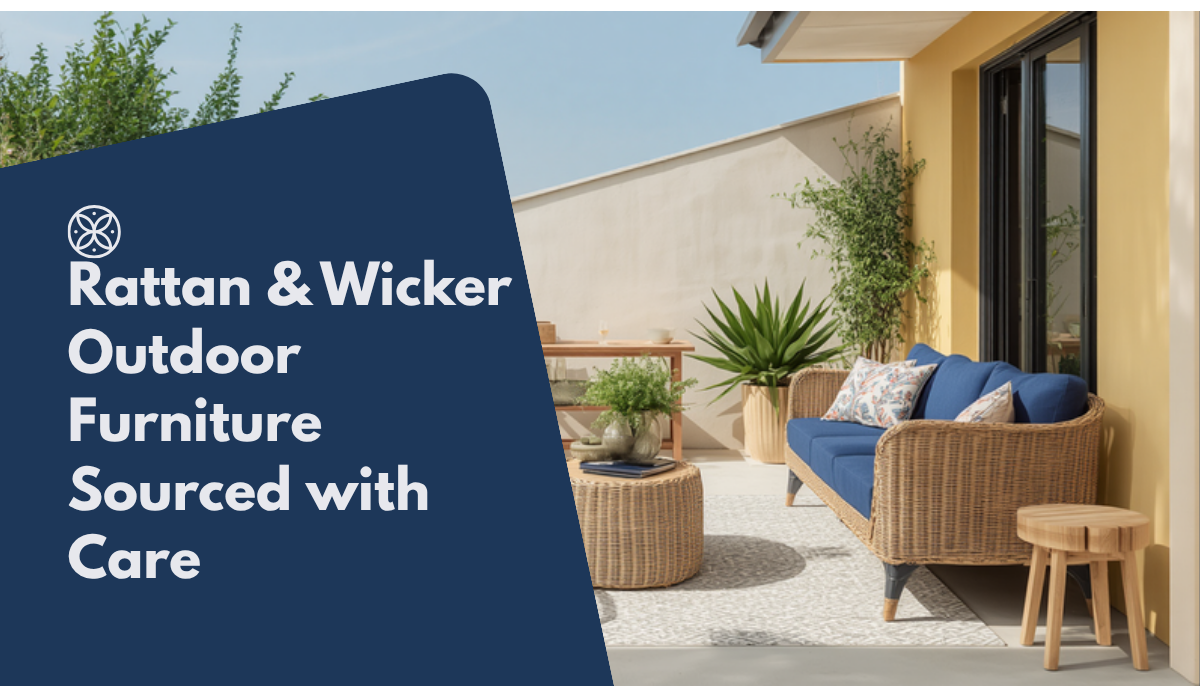
Natural rattan looks beautiful but needs a covered or indoor-adjacent setting in the Australian climate — Adelaide's hot, dry summers and UV exposure will crack untreated natural rattan within a season or two outdoors. Synthetic (PE) wicker, woven over an aluminium frame, is the safer bet for genuinely outdoor pieces and is what most reputable Vietnamese workshops now recommend for export orders headed to harsh-sun markets like Australia.
Not reliably. Untreated natural rattan is best positioned as an indoor or covered-alfresco product for the Australian market. If a supplier tells you their natural rattan range is fully weatherproof for uncovered outdoor use, treat that as a red flag rather than reassurance.
Here's a worked example for a 4-piece synthetic wicker outdoor lounge set (sofa, two chairs, coffee table):
| Cost item | Per set (AUD) |
|---|---|
| Factory FOB price (aluminium frame, PE wicker, cushions) | $310.00 |
| Sea freight + insurance (share of 40ft container, ~40 sets) | $28.00 |
| Customs duty (5%, reduced under CPTPP where applicable) + GST (10%) | $33.80 |
| Pre-shipment AQL inspection (amortised) | $4.50 |
| Estimated landed cost | $376.30 |
Equivalent sets typically retail through Australian wholesale distributors at $650-$900, which is the gap most Adelaide retailers are chasing when they move to direct Vietnam sourcing.
The industry ranges from small family weaving workshops to large joint-stock manufacturing companies, and both can be legitimate — but they need different diligence. For smaller workshops, ask for photos or video of the actual weaving floor, check they've exported to Australia, the US or the EU before (proof they understand container-grade packing and UV-stable materials), and always get a physical sample before committing to a full order.
Our bilingual Vietnam-based team runs exactly this kind of vetting daily, and it's the single biggest factor separating a five-year outdoor furniture range from one that's fading and cracking within its first Adelaide summer.
Most workshops set MOQs around 20-40 sets for a customised design (frame colour, cushion fabric, packaging), though some will go as low as 10 sets for an existing catalogue design with minor tweaks. Production typically runs 35-50 days, plus 25-30 days of sea freight from Ho Chi Minh City or Hai Phong to Adelaide via Fremantle or Melbourne transhipment.
This is where container damage claims usually start. Frames should be individually corner-protected and shrink-wrapped, with cushions vacuum-bagged separately rather than left loose against the frame. Ask your supplier for photos of a completed pack-out before the container is sealed — it's a five-minute request that catches most packing shortcuts before they become a warehouse full of scuffed furniture.
For genuinely outdoor use in Australia, yes — UV-stabilised synthetic wicker over an aluminium frame will outlast natural rattan outdoors by years, since it doesn't dry out, crack or attract pests the way untreated natural fibre can.
Natural rattan and cane products can attract DAFF biosecurity attention as a plant-based material, so fumigation or treatment certificates are often required. Synthetic wicker avoids this issue almost entirely, which is another point in its favour for a smoother import process.
Yes, most workshops offer custom frame powder-coat colours and cushion fabric selection, though this usually pushes MOQs up slightly and adds 1-2 weeks to production versus an existing catalogue design.
Always clarify this before comparing quotes — an FOB quote excludes freight, insurance, duty and GST, so two quotes that look similar on paper can differ by 20% or more once landed cost is calculated properly.
12 months against frame and weave defects is standard for export orders, though this only holds up if you've documented the pre-shipment inspection — which is exactly why an AQL check before the container leaves matters as much for warranty leverage as for catching defects early. We cover the sampling process in detail in our AQL guide.
Our Vietnam-based bilingual team vets workshops, checks UV-stabilisation and frame quality in person, and manages AQL inspection before your container ships — so an Adelaide retailer isn't relying on photos and promises from the other side of the world. We've helped more than 300 Australian businesses source across furniture, homewares and outdoor categories with average savings around 77% versus local wholesale. Book a free discovery call and we'll help you find a rattan or wicker supplier that's actually built for the Australian climate.


