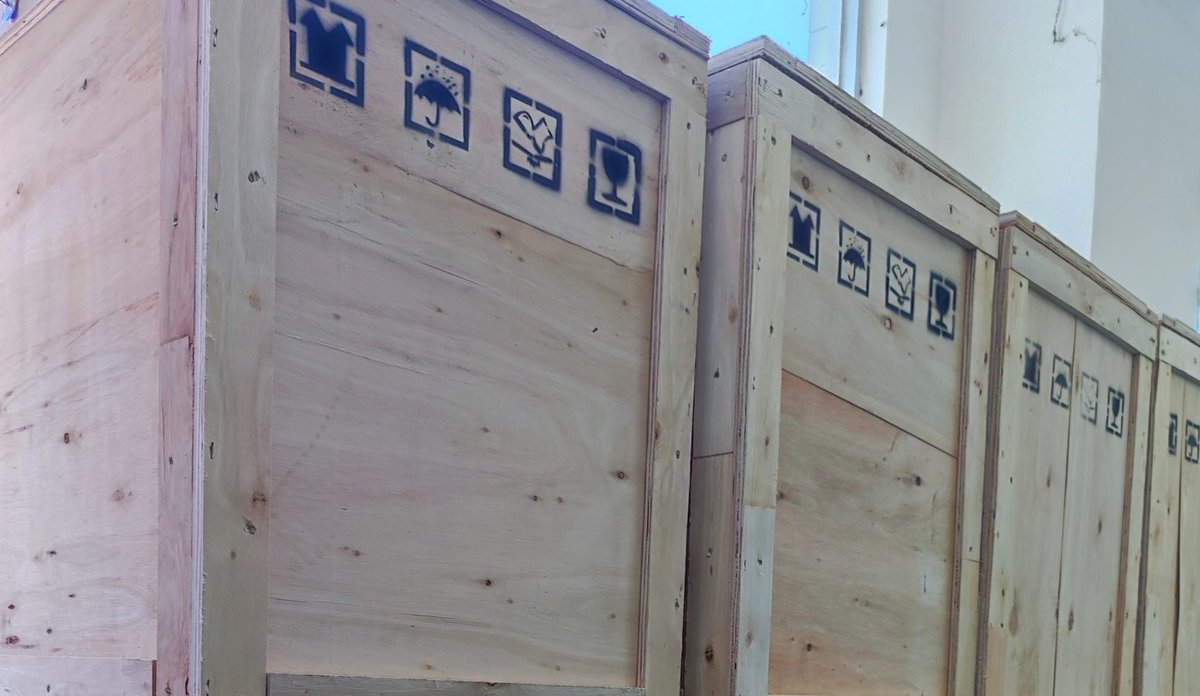
It isn't only cheap labour. China has dense supplier clusters, busy ports and a lot of production skill, so parts, packaging and testing can sit close together.

Last updated: 18 November 2026
In short: It isn't only cheap labour. China has dense supplier clusters, busy ports and a lot of production skill, so parts, packaging and testing can sit close together. That still doesn't mean every factory is good, or that China is the only option for an Australian business.
People also ask "why are most things made in China". Not everything is, but a large share of everyday manufactured goods is made there, which is why the question comes up so often.
A better question is why so much manufacturing is still in China. Over several decades, whole supply chains grew up around the same product types, from metals and plastics through to packaging and testing. A Sydney brand can often find the factory, the coater, the carton maker and a test lab in the same region. That makes samples and fixes faster.
Australia also buys a wide range of goods from China. For the categories behind that trade, see what Australia imports from China.
Well-known brands still make many products in China because that supply base is deep, not only because labour is cheaper. Apple is one example. For the product-by-product view, see where Apple products are made.
No. Labour cost is one factor, and it has been changing, but it isn't the whole story. The reasons below are the ones that usually matter for a small Australian brand.
Take one Sydney product: a 10 kg adjustable dumbbell set with a cast iron core, a TPU coating in black and grey, and a moulded storage tray. The table shows why that kind of order often stays in a tight manufacturing region, rather than moving to wherever wages look lowest.
| Reason | What it means for a small brand |
|---|---|
| Supplier clusters | For the dumbbell set, the castings, the TPU coating, the moulded tray, the packaging and a test lab can sit close together. A fit or colour fix is quicker when those trades are nearby. |
| Ports and shipping | Regular sailings to Australia make it easier to plan a shipment once the goods have passed inspection. East China often ships through Ningbo or Shanghai, and south China through Guangzhou or Shenzhen. That doesn't mean every Chinese port has a direct weekly service to every Australian port. |
| Skills and process range | You're more likely to find a factory that has already run cast iron, TPU coating or tray moulding, so it doesn't have to learn the process from scratch. |
| Scale | It's easier to find a line that can handle your volume, and to buy cartons, labels and inserts from nearby suppliers. This isn't a reason to skip a factory check. |
| Not only labour | A slightly cheaper labour rate won't help if the coating, the tray fit or the packaging is late or off spec. |
No. "Made in China" tells you the country of manufacture, not the grade of the factory. Good factories and poor factories exist in every manufacturing country, including China, Vietnam and Australia.
Quality depends on the specification you issue, the factory you pick, and the checks you run before the goods ship. A 10 kg dumbbell with an even TPU coat and a tray that fits is a factory result, not a country result. For how those checks work, see product quality control when sourcing from China.
Labelling is a separate question. If you need to mark origin correctly for sale in Australia, see Made in Australia vs Made in China country of origin labelling.
Quality depends on the factory you pick.
Check the company and the plant before you place the order, not after the first shipment lands.
Get your supplier verifiedSome work is moving, and many Australian businesses now look at a China plus one plan. That isn't the same as Vietnam replacing China.
Vietnam can be a strong option for some products, especially where you want a second country in the mix. In our experience, Vietnam can suit natural fibres, handmade goods, hardwood furniture and decor, while China often suits industrial products and smaller orders. Vietnam factories often import Chinese parts, which can change the cost and the minimum order. China remains a strong option for others, including products that need a tight cluster of trades, like the dumbbell set above. Compare the two in our guide to Vietnam vs China manufacturing for Australian businesses, and see the China plus one strategy guide if you want to split risk.
The right move depends on your product, not on a headline about factories leaving China. If you change country, you still need to check the new factory, the materials and the packing, just as you would in China.
Often, yes, but it isn't automatic. China is still a sensible place to start for many lines a Sydney business wants to import, including a cast iron dumbbell set like the one above. The case is stronger when you need several trades in one region, and when you can check the factory and the goods before they ship.
It may not be the best fit if your product is already made well in Vietnam, or if you have a reason to split production across two countries. Compare quality, capacity and your ability to inspect, not a single headline about cost.
Duty is a separate step, and it depends on the product and the paperwork. Don't guess a rate. ChAFTA has been in force since 20 December 2015. The FAQ below points you to the ChAFTA guide, and your customs broker should confirm the treatment for your goods.
Because China built deep supplier clusters, ports and production skill around many everyday goods, not only because labour was cheap. For a small brand, that often means the factory, the coating, the packaging and a test lab can sit close together.
No. Country of origin isn't a quality grade. Quality depends on the factory, the specification and the inspections you put in place. That's why two products made in the same country can perform differently.
No. Some orders are moving, and Vietnam is an important option for many Australian businesses, but that isn't the same as a full replacement. Many brands use both, which is the point of a China plus one plan.
It depends on the product, the volume and what you include in the comparison. Don't rely on a factory quote alone, and don't use a made-up saving. Compare the landed cost, the checks you need and your time, then decide.
Sometimes, depending on the product and the paperwork. ChAFTA has been in force since 20 December 2015. See our guide to ChAFTA duty savings when importing from China, and check the treatment with your customs broker.
If you want help choosing where to make a product, Epic can run the sourcing project in China or Vietnam, check the factory, and arrange inspection before the goods leave.
Out Source covers the full sourcing project. Verification reports, typically in under 48 hours. QC and factory audits check the goods before they leave. Epic works with 300+ clients and has 5 offices worldwide, with teams on the ground in China and Vietnam. See what each option includes.
Not sure whether China still fits your product?
Tell us what you're making, and we'll talk through the country choice and the factory checks.
Book a free discovery chat